
What Are Current Assets? Definition + Examples

This is by no means an exhaustive list—the current assets that a business holds will vary depending on the size of the business, the industry, and what they choose to put their money into. Supplies may be recorded as expenses immediately if the value is insignificant. If an item has a significant value and is expected to be used over the course of more than a year, it is better classified as a fixed asset. The more sales you generate, the more current assets your business will have.

Examples
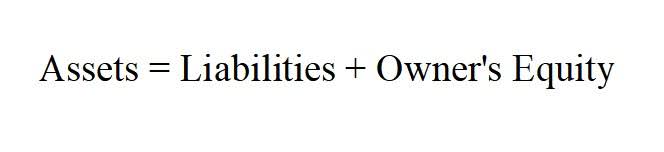
They typically include cash and cash equivalents, marketable securities, accounts receivable, and inventory. In some cases, prepaid expenses are also classified as current assets. Current assets are important components of a company’s balance sheet and financial statements. Current assets are items that a company expects to convert to cash in one year.
Importance of current assets in financial management

Financial ratios often use current assets to determine how easily a company is able to pay what is current assets its debts as they come due. These ratios include the Current ratio and the Quick ratio (also know as the acid test ratio). These liabilities might include the amounts you owe to suppliers (accounts payable), credit card balances, income tax liabilities, and short-term loan payments like a line of credit. Current assets are short-term resources that can be used or converted to cash within one year or one operating cycle, whichever is longer.
- Noncurrent assets are “illiquid,” meaning you cannot turn them into cash easily.
- Marketable securities, accounts receivable, cash, cash equivalents, and inventories are a few examples of current assets.
- Fixed assets are tangible and directly involved in operations, for example land, buildings, machinery, and vehicles.
- They are easily convertible to known amounts of cash and are subject to insignificant risk of changes in value.
- Interpreting the total current assets figure involves analyzing liquidity and operational efficiency.
Current assets formula

In other words, for every $1 of current liability, the company has $2.32 of current assets available to pay for it. Any short-term Statement of Comprehensive Income investment that is expected to be sold or converted into cash within 12 months from reporting dates should be classed as current assets. A company may have a mix of these types of current assets, and it should consider the amount of each. These are expenses paid in advance, but will not be used until the period indicated.
- Current assets can be found at the top of a company‘s balance sheet, and they’re listed in order of liquidity.
- In conjunction with inventory, accounts receivable and securities account play a key role in understanding a company’s liquidity, which is vital for financial stability.
- Lenders and investors often look at a company’s total current assets when evaluating its creditworthiness.
- Also, the current liabilities of Company A and Company B are very different.
- Marketable securities are slightly riskier than cash equivalents and are typically invested for longer-term returns, though still quite liquid.
Step 2: Optimize accounts receivable
Know exactly where your outstanding invoices are in the process and set up automated reminders to easily https://www.bookstime.com/ nudge customers. Assets also have different degrees of ability to be turned into cash on short notice—this is called liquidity. An asset that can be easily turned into cash quickly is called a liquid asset. Marketable securities are highly liquid instruments that include stocks, Treasuries, commercial paper, exchange-traded funds (ETFs), and other money market instruments.
0 comments